
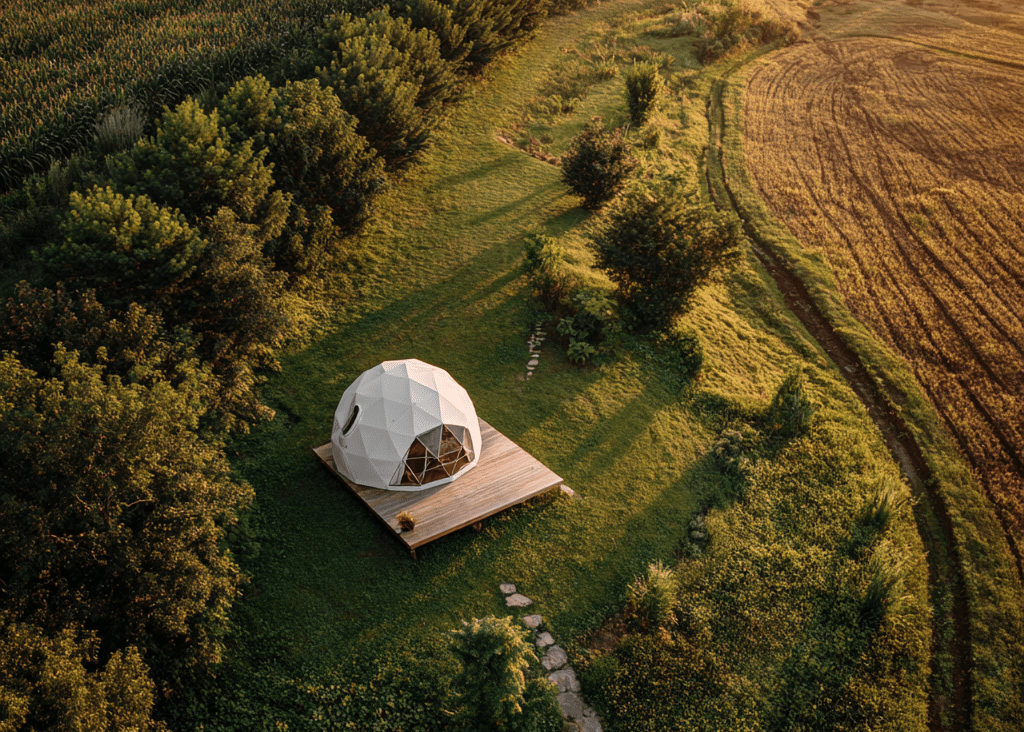
Some glamping photos just stop you in your tracks.
You know the ones: canvas tents glowing in the desert, decks floating above the sea, bell tents tucked into old farm fields under a sky full of stars. They don’t look like “camping.” They look like tiny boutique hotels scattered across wild landscapes.
The good news? You don’t need hundreds of acres or a resort-sized budget to borrow the same design principles.
In this guide, we’re looking at four standout glamping destinations—from the desert dunes of Dubai to a historic farm in Belgium—and breaking down what they do differently. Then we’ll translate those ideas into moves you can actually make in your own backyard, on a small piece of land, or as part of an Airbnb-ready retreat.
What World-Class Glamping Sites Get Right
Whether they’re in the desert, by the sea, or on a working farm, the best glamping resorts consistently do five things well:
-
They treat tents as architecture, not gear.
-
They let the landscape lead the design.
-
They stick to a calm, cohesive color story.
-
They design for climate and comfort first, aesthetics second.
-
They build around a clear emotional experience (wonder, stillness, adventure, nostalgia).
The four locations below are perfect examples—and powerful inspiration for anyone building their own “micro-resort,” backyard sanctuary, or glamping-style rental.
1. Terra Solis – Festival Oasis in the Dubai Desert
Location: Dubai, United Arab Emirates
Outside Dubai, Terra Solis rises out of the sand like a mirage built for festival lovers and desert dreamers. Rows of sculptural bell tents sit on solid platforms, laid out like a resort rather than a campground. The canvas itself is built to endure brutal heat, strong UV, and sand, while still feeling comfortable and inviting on the inside.
The site blends technical performance and luxury atmosphere: durable fabrics, climate-conscious design, and interiors that feel closer to a hotel suite than a tent. At night, warm lighting, fire features, and low seating turn the desert into an open-air lounge.
Design takeaway for your space:
-
If you’re in a hot or harsh climate, start by upgrading your structure and fabric quality—shade, ventilation, and durability come first.
-
Elevate your tent on a deck or platform so it reads as a permanent “room,” not a temporary shelter.
-
Use low seating, intentional lighting, and a defined outdoor lounge area to get that “desert resort” feel, even in a regular backyard.
2. Canvas Club – Silent-Luxury Tents in the Omani Desert
Location: Oman
Canvas Club feels like a private chapter of an old travel novel: Bedouin-style tents arranged in the sand, layered rugs underfoot, lanterns glowing softly after dark. Guests aren’t just staying in a tent—they’re stepping into a carefully crafted moment of quiet, where star-filled skies and deep stillness do most of the talking.
The interiors are understated, elegant, and deeply tactile: cushions, textiles, and warm metal accents instead of plastic camping gear. The camp focuses on privacy, calm, and tailor-made experiences rather than excess décor.
Design takeaway for your space:
-
You don’t need hundreds of accessories. Choose a few strong sensory anchors: soft rugs, warm lantern light, and a seating arrangement that encourages slowing down.
-
Lean into minimalism with purpose—fewer, better pieces that work together: woven baskets, natural fabrics, simple tables, and floor cushions.
-
Think about what guests will hear and see from the tent at night: can you create stillness, darkness, and a clear view of the sky?
3. Kagawa Glamping – Coastal Calm Above the Seto Inland Sea
Location: Higashikagawa, Japan
Perched in the hills with sweeping views of the Seto Inland Sea, Kagawa Glamping pairs bell tents with cottages and a private beach. The tents sit like soft, sculptural forms above the water, with decks oriented toward islands and sky. The aesthetic is calm, coastal, and quietly luxurious.
This retreat shows how powerful view placement and restraint can be. The color palette sticks to sand, stone, soft blue, and natural wood, allowing the water and horizon to become the main event. Activities—like beach time and simple outdoor lounging—revolve around that view.
Design takeaway for your space:
-
If you have even a small view—lake, pond, pool, trees, or city skyline—aim the tent and deck directly at it. Let the entrance frame your best sightline.
-
Use a coastal-inspired palette: warm whites, pale neutrals, muted blues, and light-toned wood or rattan.
-
Keep the outdoor setup simple but intentional: two comfortable chairs, a small table, and a clear path from tent to “viewing spot.”
4. Maïsterplan – Organic Farm Glamping With Deep Roots
Location: Damme, Belgium
Maïsterplan is set on a family farm with history stretching back to the 1800s. Instead of overpowering the land, the glamping tents are woven gently into it—sitting on platforms between fields, hedgerows, and a corn maze that guests can wander through.
The site proves that glamping doesn’t need to erase a working landscape. The tents are cozy and stylish inside, but the real magic is how they connect guests to the farm: walking paths, views across the fields, and the sense of staying inside a living story.
Design takeaway for your space:
-
If your land has history—an old house, mature trees, outbuildings—highlight it rather than hiding it. Let your tent feel like a natural extension of what’s already there.
-
Use planting and soft edges to nestle your structure into the landscape: grasses, herbs, shrubs, and wildflower borders instead of bare lawn.
-
Consider adding one or two signature experiences tied to the land: a garden to harvest from, a small walking loop, or a fire circle under a favorite tree.
How to Apply These Ideas to Your Own Retreat
You might not have a desert, a private beach, or a 180-year-old farm—but you can still design like the best glamping resorts do.
Here’s how to translate their approach into your own project:
1. Treat Your Tent Like a Tiny House
Pick a tent or structure that feels architectural: a quality bell tent, yurt, dome, or safari-style tent. Put it on a deck or platform, give it a clear entrance, and define zones for sleeping, lounging, and gathering.
2. Let the Land Lead
Ask: What’s the most beautiful thing here? A tree, a view, a garden, a fence line, a patch of sky. Position your tent and outdoor seating to honor that focal point.
3. Choose a Calm Color Story
Borrow from these resorts: warm neutrals, natural textures, and one or two accent tones repeated throughout. This makes even simple, affordable pieces feel intentional and elevated.
4. Design for Comfort in Your Climate
-
Hot: shade sails, awnings, cross-ventilation, light fabrics.
-
Wet: decks, drainage, fast-drying textiles.
-
Cold nights: layered rugs, insulated underlay, warm bedding, and safe heat sources.
Comfort is the difference between “that’s a nice photo” and “that was the best place I’ve ever stayed.”
5. Build an Experience, Not Just a Setup
Give your space a role: stargazing deck, backyard spa corner, kids’ adventure camp, creative retreat. Add one or two elements that support that identity—projector and screen, outdoor bath or plunge tub, yoga mat and cushions, or a game / reading nook.
Bringing Resort-Level Glamping Home
From Dubai to Oman, Japan to Belgium, these glamping sites prove that a tent can be so much more than a place to sleep. It can be the most memorable “room” on the property—if you design it that way.
Whether you’re dreaming up a backyard haven, a small glamping site, or an Airbnb-ready add-on to your existing property, you can start with the same ingredients:
-
A well-built, beautiful tent
-
A thoughtful deck or platform
-
A calm, cohesive design story
-
A strong connection to the land around it
Layer in light, comfort, and a clear experience—and suddenly, you’re not just pitching a tent. You’re building a retreat people never stop talking about.
0 comments